News

4 Things You Must Never Say at a Funeral

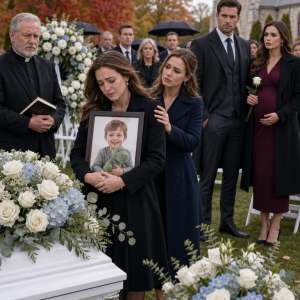
Funerals are deeply emotional occasions filled with grief, reflection, and remembrance. In such moments, the words we speak carry significant weight. Even with the best intentions, certain remarks can come across as dismissive, insensitive, or even hurtful to those mourning a loved one. Whether you’re comforting a friend, family member, or colleague, it’s essential to approach conversations with empathy and care.

Here are four common phrases to avoid at a funeral — and more thoughtful alternatives to express your support.

1. “They’re in a better place now.”

While often meant to offer comfort, this phrase can unintentionally dismiss the mourner’s pain. Suggesting that someone is “in a better place” might come across as minimizing the grief someone feels in the present moment. For those still processing the loss, it can feel like their sorrow is being brushed aside.

What to say instead:
“I’m so sorry for your loss. I’m here if you need anything.”
Simple, sincere words are often the most meaningful.

2. “At least they lived a long life.”

While it’s true that age can sometimes provide perspective, it doesn’t soften the pain of losing someone important. Grief doesn’t come with a formula, and implying that a long life somehow makes death easier can feel dismissive. The mourner may even feel guilty for their sorrow, as if they should feel grateful instead of heartbroken.


What to say instead:
“They touched so many lives. I know they meant a lot to you.”
Acknowledge the significance of their life — and their loss — without trying to justify it.

3. “I know exactly how you feel.”

Even if you’ve experienced a similar loss, grief is deeply personal. Saying “I know how you feel” can shift the focus away from the mourner and onto yourself. It may also sound presumptuous if your circumstances were different, even slightly.

What to say instead:
“I can’t imagine what you’re going through, but I’m here for you.”
This approach shows empathy without assuming shared experience.

4. “Everything happens for a reason.”

This phrase often stems from philosophical or spiritual beliefs, but in the context of fresh grief, it can feel cold or abstract. Assigning meaning to a loss can seem like an attempt to rationalize pain rather than acknowledge it. For someone hurting, it might sound like you’re trying to explain away their sorrow instead of simply honoring it.

What to say instead:
“This must be incredibly hard. I’m so sorry.”
Recognizing their pain without offering explanations can be a powerful show of compassion.

Final thoughts

When offering condolences, your words don’t need to be poetic — they just need to be genuine. Often, your presence, a warm hug, or a quiet moment of listening can mean more than anything you say. The most important thing is to speak from the heart, and to be there for someone in the way they need most.

Related Posts

At My Daughter’s Funeral, My Son-in-Law Pointed at His Three Girls—12, 9, and 6—and Announced, “They’re Going Into Foster Care. My New Fiancée and I Deserve a Fresh Start.” I Took Them Home Without Arguing, but at 3 A.M., the Oldest Placed a Purple Bag on My Table and Whispered, “Mom Said to Open This Before Dad’s Wedding.” What She Had Protected for Months Changed Everything We Thought We Knew..

The Things My Daughter Left Behind A Promise Beside the Grave My son-in-law waited until the minister had finished the final prayer before announcing that he no longer...

I Took Our 7-Year-Old Daughter to Surprise My Husband at His Company Gala—But His Assistant Said, “His Wife and Son Are Already Upstairs.” When the Elevators Opened, My Daughter Whispered, “Daddy?”… Then One Phone Call Revealed Why Her Name Was Hidden in His Secret File

The Gift in Her Hands For nearly a month, my husband had been coming home after our daughter was asleep. He always had a reasonable explanation waiting for...

I Followed My Wife to Her Mother’s House Planning to End Our Marriage, But What I Heard Outside the Kitchen Window Made Me Realized Why She Had Been Pushing Me Away—And I Wished I’d Never Doubted Her

Before the Door Opened Ryan Carter parked across the street and stared at the envelope resting on the passenger seat. Inside were divorce papers. He had signed them...

When I Came Home From the Hospital Unable to Walk Without Crutches, My Mother-in-Law Told My Husband, “You Can’t Spend the Rest of Your Life Carrying Her”—He Stayed Silent, I Opened My Blue Medical Folder and Waited… Because That Silence Was About to Cost Him More Than a House and His Family Name

The Silence in the Living Room “You cannot expect him to spend the rest of his life taking care of you.” Patricia Reeves said it from the center...

TTiêu đề H1 lẹ;la;k;lakd;ákdlasdas;jas;ldksaldklas;kdl;sakd;álkd;lákd;lsakd;lskdl;skd;l lẹ;la;k;lakd;ákdlasdas;jas;ldksaldklas;kdl;sakd;álkd;lákd;lsakd;lskdl;skd;l lẹ;la;k;lakd;ákdlasdas;jas;ldksaldklas;kdl;sakd;álkd;lákd;lsakd;lskdl;skd;l lẹ;la;k;lakd;ákdlasdas;jas;ldksaldklas;kdl;sakd;álkd;lákd;lsakd;lskdl;skd;l

Để lại một bình luận

Email của bạn sẽ không được hiển thị công khai. Các trường bắt buộc được đánh dấu *