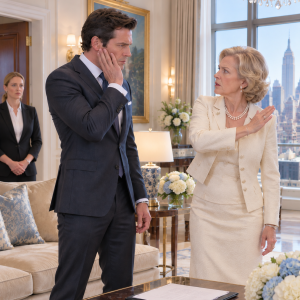
He had not pursued Emily because evidence proved her guilty. He pursued her because punishing a less powerful woman felt easier than confronting Lauren, Madison, or his own failure to investigate.
His plan also allowed him to feel noble while practicing cruelty.
During one session, his therapist asked whether he had ever considered that Emily might genuinely love him.
Nathan answered after a long silence.
“I knew she loved me. That was why the punishment would work.”
Saying the sentence aloud destroyed the final illusion that revenge had been an accidental excess.
He had intentionally used love as the weapon.
The Apology Emily Did Not Need
Eighteen months after the annulment, Nathan wrote Emily a final letter through their attorneys.
He did not ask for reconciliation or forgiveness.
He acknowledged that his previous apologies focused upon his intentions, grief, and confusion rather than the damage he caused.
The letter included one paragraph Emily eventually showed Diane.
“I believed feeling wounded gave me the right to decide who deserved pain. I now understand that I did not seek truth because truth might have required humility. You loved someone I invented, and I used that love with full knowledge that it would make the ending more destructive.”
Emily did not respond.
She did not need to reward accurate self-awareness merely because it arrived late.
By the second anniversary of the wedding that never became a marriage, Emily had opened her own design practice in Charlotte. Her projects combined modern interiors with preserved architectural details, and several regional magazines featured her work.
She also began dating Daniel Brooks, a thirty-two-year-old landscape architect she met through a restoration project.
Daniel knew the history before their relationship became serious. He never demanded that Emily prove she trusted him, and he did not treat patience as a favor deserving gratitude.
When he proposed, he did so privately inside a house they had restored together.
Emily accepted without announcing the engagement immediately.
She wanted several weeks in which the decision belonged only to them.
Diane learned the news from Emily herself.
“I wanted you to hear it directly from me,” Emily said during a video call.
Diane smiled through tears.
“Is he kind when nobody is watching?”
Emily looked toward Daniel, who was preparing coffee in the background.
“Yes. Especially then.”
That answer gave Diane more peace than any description of his income, family, or professional status could have offered.
The Son Who Watched Someone Else Protect What He Destroyed

Several months later, a relative mentioned Emily’s engagement during dinner at Robert and Diane’s home.
Nathan had returned for a scheduled family visit. He became silent and lowered his eyes toward the table.
Diane did not mock his grief.
She also did not protect him from understanding it.
“One of the hardest lessons of growing up too late,” she said, “is watching someone else cherish what you deliberately broke.”
Nathan nodded while struggling to control his expression.
“I know she deserves happiness.”
“Knowing what someone deserves should matter before you decide to harm them.”
He accepted the correction.
That evening, Nathan helped Robert clear dishes, repaired a loose cabinet hinge, and left without asking anyone to report his remorse to Emily.
Small acts did not erase what he had done. They only indicated that he might someday become a safer person than the man who entered that wedding night.
Diane never promised reconciliation between mother and son would become effortless.
She loved him, but she no longer trusted his judgment automatically. Their relationship survived through boundaries, therapy, and his willingness to hear disapproval without describing it as abandonment.
Emily married Daniel the following spring in a small botanical garden near Charlotte.
Lauren attended as both friend and professional collaborator. Patricia walked Emily toward the ceremony, while her recovered younger brother carried the rings.
Diane sat in the second row at Emily’s invitation.
Nathan did not attend.
He sent no flowers and requested no recognition. Through an attorney, he transferred ownership of several remaining wedding gifts to a nonprofit supporting survivors of digital harassment.
Emily wore a simple ivory dress without the elaborate train from her first ceremony.
When Daniel took her hands, he did not promise never to disappoint her. He promised that uncertainty would be met with questions rather than accusations, while conflict would never become punishment.
Those vows mattered because they described behavior instead of fantasy.
After the ceremony, Diane embraced Emily.
“You look peaceful.”
Emily smiled.
“I finally am.”
The first wedding had been beautiful in every photograph and false in every essential way.
The second wedding was smaller, quieter, and built upon a truth that required no audience.
What Graceful Love Actually Required
Years later, Diane continued to think about the scream behind the locked door.
She remembered how easily a family might have chosen denial. Nathan was her only son, respected by relatives and professionally successful. Emily came from a family with less money and fewer social connections.
Protecting the family reputation would have required only a few familiar sentences.
Nathan was confused.
Emily overreacted.
The matter should remain private.
Instead, Diane believed the frightened woman sitting against the wall.
That decision did not make her disloyal to her son.
It prevented her love from becoming another weapon used against Emily.
Nathan eventually rebuilt a quieter life. He remained in therapy, volunteered with a restorative-justice program, and spoke to college groups about digital harassment, false certainty, and emotional manipulation.
He never identified Emily publicly or transformed her suffering into a redemption story centered upon himself.
When audiences asked whether the person he harmed forgave him, he answered honestly.
“Forgiveness was never mine to request as proof that I changed.”
Emily’s design firm expanded across North Carolina and Georgia. She and Lauren collaborated on projects for affordable housing organizations, using their professions to restore both buildings and opportunities.
Patricia retired with stable health coverage and spent weekends caring for Emily’s garden whenever her daughter traveled.
Diane remained part of Emily’s life, not because the failed marriage entitled her to that role, but because years of respectful presence gradually made the relationship real.
The story began with a wedding designed as punishment.
It ended with three women refusing to let one man’s revenge define the rest of their lives.
Lauren reclaimed the career taken through fabricated accusations.
Emily reclaimed the capacity to trust without surrendering her judgment.
Diane discovered that motherhood sometimes required standing against the person she had raised.
Nathan’s greatest loss was not the public embarrassment, the annulment, or the career disruption.
It was knowing that Emily had offered him sincere love while he treated sincerity as an opportunity for maximum damage.
He could become more honest, responsible, and compassionate.
He could never return to the moment before he chose cruelty.
Emily, however, no longer needed that moment returned.
She had built something better from what remained.
The first man she married believed love made her vulnerable.
The second understood that love should make vulnerability safe.
That difference became the foundation of the life she chose for herself.
THE END