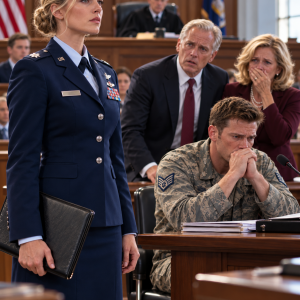
The divorce had ended in one morning, but understanding the marriage would take considerably longer.
Part 6 – What Survived the Family Name
Sterling Capital did not collapse overnight, but it could not continue pretending the historical records were irrelevant.
The board appointed independent counsel and a special committee to review transactions connected to the old files. I stepped away from decisions where my personal exposure to Daniel, Marisol, and my grandfather created obvious conflicts.
Some assets proved legitimate, while others became subjects of civil claims, regulatory review, and negotiated restitution. Several families finally received records explaining what had happened to relatives decades earlier.
My father wanted to protect the company at first.
Then he surprised me.
“If the only way Sterling Capital survives is by insisting the past belongs to dead people, perhaps it does not deserve to survive unchanged.”
We restructured.
Parts of the business were sold.
A clean investment subsidiary remained after extensive review, while a separate restitution foundation was funded from assets my grandmother had intentionally segregated years earlier.
I insisted the foundation carry no Sterling name.
Marisol and I never became friends.
She had helped place Daniel in my life, and nothing about her family’s suffering erased that choice. At the same time, I stopped expecting her anger to become convenient for me.
We communicated through counsel whenever evidence required it.
Celeste’s case moved separately, as did Daniel’s.
I refused to measure justice by predicting prison sentences before courts finished their work. Six months later, I returned to the waterfront restaurant.
The young waiter who had delivered the declined-card message still worked there while attending evening accounting classes.
His name was Mateo Ruiz, and he was twenty-four.
After his shift, I told him, “You probably think I came to thank you for humiliating my ex-husband.”
He looked horrified. “I only explained why the terminal rejected the card.”
“Exactly, and later you gave investigators an accurate statement without embellishing it for attention.”
Through the new restitution foundation, I had created a scholarship program for hospitality workers studying accounting, compliance, or finance.
Mateo became the first recipient only after an independent committee reviewed his application.
When I handed him the award letter, he stared at it.
“You really do not owe me anything.”
“That is why this is not repayment. It is funding for work you were already doing.”
He smiled slowly.
That distinction mattered to me more than he probably understood.
Part 7 – The Woman I Was Before the Medicine

One year after the divorce, I no longer thought about the declined card first.
I remembered the courthouse bench.
My father’s voice.
The bottle on the nightstand.
The terrifying realization that my confusion had been used as evidence against my own judgment.
Medical review ultimately confirmed that I had been receiving medication inconsistent with what I believed had been prescribed, although investigators and physicians remained responsible for determining how each dose reached me and who knew what.
My memory improved gradually after treatment changed.
So did my confidence, although confidence returned more slowly than cognition.
For months, I still checked ordinary decisions twice because Daniel had trained me to distrust the first version of my own thoughts. Therapy, work, and watching my mother regain her routines gradually helped that habit loosen.
My father and I became closer because he finally stopped asking me to protect the Sterling name before protecting the truth.
On the anniversary of the divorce, we ate dinner at my apartment instead of attending a board event.
He raised his glass.
“Do you ever regret changing the PINs before you knew the entire story?”
I smiled.
“No. That was the first decision I made in months without asking Daniel whether it sounded reasonable.”
The cards and the party were never the important part. The declined payment merely interrupted a system that depended upon me remaining confused long enough for other people to keep using my authority.
Daniel believed sedation could make me manageable.
Marisol believed my marriage could become a key.
Celeste believed old corruption could become a throne.
My family had once believed secrecy could preserve respectability.
Every one of those plans required the same thing from me.
Silence.
I no longer confuse silence with dignity.
Sometimes dignity means speaking carefully.
Sometimes it means admitting your own family caused harm.
Sometimes it means allowing investigators to work instead of turning pain into spectacle.
And sometimes it means sitting on a courthouse bench, changing six pieces of financial access information, and discovering that one ordinary act of control can expose how many people were depending upon your inability to say no.
I lost a marriage that year.
I also lost the clean version of my family history.
What returned was less comforting and far more useful.
My memory.
My judgment.
My name, stripped of the mythology surrounding it.
For the first time, those things actually belonged to me.
THE END