Hidden Moral Stories

My Parents Said, “You Chose This Life,” When I Begged Them to Stay With My Two Young Sons While Their Nine-Year-Old Sister Was Admitted to the Hospital—Then They Posted “Family Is Everything.” A Year Later, They Came to My Door Asking to Start Over, Until I Asked the Question That Made All Four of Them Fall Silent…

The Night the Circle Broke

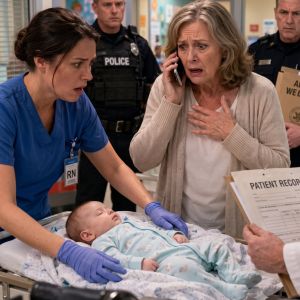
At 8:07 on a rainy Thursday evening, my nine-year-old daughter lay at Lakeview Children’s Medical Center in Cleveland, while her two younger brothers were nearly two hours away in our rented duplex outside Fremont, Ohio, with a neighbor who could stay only until midnight.

My name is Katherine Bellamy. I was thirty-six, recently divorced, and writing educational materials from our dining-room table. People called me capable, though I had merely learned to carry too much without letting it fall where anyone could see.

Sadie had spent the afternoon undergoing tests. Just before sunset, her specialist explained that the illness we believed was behind us had returned and treatment needed to begin immediately. She would remain in the hospital for an uncertain number of weeks. I listened while staring at the purple polish on her fingernails, chipped because she had painted them herself.

After the doctor left, she asked, “Did Luke remember to feed Pickles?”

Pickles was the orange goldfish who had somehow survived our move and Milo’s attempt to feed him crackers.

“He remembered,” I said, though I had no idea.

Luke was seven, Milo was four, and Mrs. Whitaker from downstairs had put them to bed after promising she would stay as long as she could. I had assured her I would find someone. I had assured the boys I would be home by breakfast. I had assured Sadie I would not leave her.

Motherhood sometimes feels like standing where three roads divide while every child calls from a different direction.

I went into the stairwell and called my mother.

Elaine Hargrove answered after several rings. Restaurant music hummed behind her.

“Katherine, we’re having dinner.”

“Mom, Sadie’s condition has returned. They’re keeping her here, and I need someone to stay with the boys. I’m not asking for money. Just one adult in the house until morning.”

The pause that followed sounded less like fear than someone reviewing a calendar.

“How long will this go on?”

“I don’t know. Tonight is what I’m asking about.”

She sighed. “Your father and I already have plans this weekend.”

“I’m asking for Thursday night.”

Her voice hardened. “You built a life that is always on the edge of an emergency. Three children, a marriage we warned you about, freelance work instead of a proper position—you cannot expect us to rearrange everything.”

I pressed one hand against the wall.

“Sadie is seriously ill.”

“And I am sorry, but you chose this life. You need to manage it.”

My father was close enough that I heard him ask who was calling.

“Dad,” I said. “Please. Just stay with the boys.”

My mother covered the phone and said, “Thomas, don’t start.”

He never took the call.

Two minutes later, our family thread lit up with a steakhouse photograph of my parents beside my younger sister and her husband. The caption said nothing mattered more than family. I asked whether anyone could stay with Luke and Milo. Six relatives viewed the message. No one replied.

My former husband, Derek, was my final call. He lived in Phoenix with his new wife, Paige, posting cheerful pictures of a home in which our children seemed not to exist. Paige answered and, after I explained, gave an impatient laugh.

“You’re the independent one, Katherine. Be independent.”

Derek’s voice came faintly from beside her.

“This is a really bad time for us,” he said.

I returned to Sadie’s room, opened the blue notebook I used for work, wrote down four names—Elaine, Thomas, Derek, Paige—and then called Mrs. Whitaker.

The People Who Came

Before I could finish apologizing, Mrs. Whitaker interrupted me.

“The boys are asleep. Luke tried to convince me that brushing one side of his teeth was enough, and Milo is wearing a cape over his pajamas. I’m staying.”

“But your appointment—”

“I am seventy-four. I can reschedule a podiatrist.”

By morning, she had created a handwritten schedule. A school mother covered one afternoon, a college student handled dinner, and a retired teacher offered pickup. None knew Sadie well, yet each stepped into the space our relatives had left empty.

For six weeks, my life became a road between Cleveland and Fremont. I slept in a vinyl chair, answered emails in hallways, drove home before sunrise to pack lunches, and returned before visiting hours. I sold my aging SUV and canceled every expense that did not keep the lights on or the children cared for.

Sadie noticed everything.

One morning, she studied my face and said, “You look like an old banana.”
“That is unusually specific.”

“I was going to say tired, but that was boring.”

Her nurse, Marian Lowell, laughed and set down the medicine cup. Silver threaded her brown hair, and reading glasses lived on top of her head. She argued with Sadie about game shows, smuggled in pudding, and treated me as though I, too, required care.

Late one night, she found me on the floor outside Sadie’s room with my laptop on my knees.

“Do you have people?” she asked.

“I have a neighbor.”

Marian studied me. “That is not the same question.”

I closed the laptop. “Then no. Not the kind who come.”

Three days later, a warm glass casserole dish appeared on the windowsill with a note claiming it was from the night staff. Marian denied responsibility so poorly that even Sadie rolled her eyes.

The treatment eventually stopped helping. I will not reduce those days to medical details, because Sadie was more than the room where we lost her. She demanded triangle toast, painted each hand a different color, named every rolling stand after a horse, and saved her best candy for her brothers.

One evening, she saw me writing.

“Put in the good stuff,” she said.

“Such as?”

“The pancake disaster. Pickles eating the cracker. And the horse book with the crooked horse.”

Then she looked directly at me.

“I was here before all this, Mom.”

“I know.”

“Promise people will know that too.”

I promised.

Sadie slipped away early on a quiet Sunday morning while snow softened the city beyond the windows. Marian remained after her shift, standing close enough that I did not have to face the room alone.

At the memorial service, my mother wept publicly and told relatives the family had done all it could. My father stared at the carpet. Derek and Paige sent flowers and stayed in Arizona.

Four nights later, I sat at the kitchen table unable to imagine morning, until I heard Luke turn over and Milo begin snoring through the wall. They had lost their sister. They still needed their mother to keep returning.

A week afterward, Marian knocked on my door carrying the casserole dish and a plain black notebook.

“Write one honest sentence,” she said. “Not a beautiful sentence. Just an honest one.”

The next morning, I wrote: Sadie believed square toast was an insult.

That sentence opened a door.

The Book That Carried Her Story

I wrote before the boys woke, in parking lots, and outside school, collecting memories before sorrow rearranged them. I wrote about nail polish, burnt pancakes, Pickles, and Sadie’s fierce opinions. Then I wrote about 8:07 p.m., my mother’s refusal, my father’s silence, the restaurant photograph, Paige’s laugh, and Derek’s excuse.

On paper, those moments stopped being evidence that I had asked for too much. They became evidence that I had asked the wrong people.

Months later, at a support group in the public library, I read the toast page aloud. Afterward, April Foster, a former magazine editor, approached me.

“Is there more?”

“Several notebooks.”

“Then you are not finished.”

April helped me shape the pages into a manuscript. Whenever anger threatened to take over, she guided me back to Sadie.

“Resentment may make people look,” she said. “Love will make them remember.”

We titled the book Before the White Room, because Sadie had insisted her real life began long before anyone placed a hospital bracelet around her wrist.

More than twenty publishers declined it. A small press in Wisconsin finally accepted it, offering little money and the most precious thing I could imagine: a place for my daughter’s ordinary, remarkable life to remain.

For several weeks, almost nothing happened. Then a pediatric nurse shared a passage online. Parents bought copies for one another, and caregivers recognized the loneliness of fluorescent hallways and unanswered phones. The book rose from a regional list to a national one.

My mother posted the cover and called me her gifted daughter. My father added applause symbols. Derek suddenly wanted to discuss the boys. Paige wrote a glowing review about the author’s courage.

Not one of them mentioned Sadie.

A year after the night in Cleveland, all four arrived together at my new little house, where Luke and Milo were running through a sprinkler beneath a maple tree.

I stepped onto the porch and closed the door behind me.

The Door I Closed Gently

My mother held flowers wrapped in clear plastic.

“We want to repair the family,” she said.

“The family needed repairing last year.”

She blamed confusion, stress, and poor communication. Derek said he had parental rights. Paige said her remark had been misunderstood. My father watched the porch boards as though the correct answer might be written between them.

Then their purpose appeared. My mother suggested family photographs, Derek mentioned the book’s publicity, and Paige offered speaking contacts. They had not come because they understood Sadie’s loneliness. They had come because my grief had become visible and valuable.

“Families help each other,” my mother said.

“I asked you for help once,” I replied. “I asked you to sit in a house with two sleeping boys. You told me the life I chose was not yours.”

My father lifted his head.

“Katherine, I should have—”

My mother glanced at him. “Thomas.”

He stopped and moved closer to her.

In that small movement, I understood that he had never been powerless. Silence was simply how he made his choices.

“There is nothing here that belongs to you,” I said. “You were absent when there was no audience, and now you want a place in the photograph.”

Derek folded his arms. “You cannot erase me as their father.”

“I did not erase you. I stopped covering the empty space you left.”

Paige’s face tightened. “You made me sound heartless.”

“I wrote what you said.”

“It was taken out of context.”

“The context was my daughter in a hospital room.”

Behind me, Milo laughed through the kitchen window.

My mother pushed the flowers toward me. “If you shut us out now, don’t expect another chance.”

I did not take them.

“You did not come back for us,” I said. “You came because strangers learned my name.”

Then I went inside and closed the door without slamming it. I had spent too many years wanting them to understand my pain. Peace began when I stopped requiring their understanding.

What Love Built

The book did not make Sadie’s absence smaller, but it gave us room to breathe. I paid the bills, bought a reliable used car, and stopped working through the night. Luke saw a counselor. Milo asked questions no adult could answer perfectly. On Sadie’s birthday, we baked chocolate cake and placed gummy horses beside an extra plate.

Marian came every Sunday. She helped with science projects, complained about my coffee, and allowed Milo to twist her silver hair into wild braids. The first time he called her Grandma Marian, she blinked rapidly.

“You can just call me Marian.”

“I know,” he said. “I picked Grandma.”

She became family not through a speech, but by continuing to arrive.

With part of the book income, I established a hospital program providing emergency sibling care, transportation, meals, and temporary rooms for parents caught between a child in treatment and children waiting at home. We called it Sadie’s Porch, because a porch is where someone decides whether to remain outside or step closer.

Years later, the program became a family support center with laundry rooms, overnight beds, counseling, legal guidance, and a desk answered at every hour. At its opening, I stood before parents, nurses, teachers, and volunteers.

“I once believed family was something assigned at birth,” I said. “Then the people related to us stepped away, while neighbors and strangers moved closer. Family is not who claims you when your name is printed somewhere important. Family is who comes when there is nothing to gain.”

Luke, older now and preparing to study nursing, sat beside Milo in the front row. Marian wore her reading glasses on top of her head and pretended not to wipe her eyes.

My father sent a handwritten apology several years after the porch visit. He admitted he had heard every word of my hospital call and remained silent because he feared arguing with my mother. I believed his regret, but belief did not require reunion. I sent one card telling him I was not ready and asking him to respect the distance. For once, he did.

That evening, after the support center opened, we returned home and ate baked ziti from Marian’s old glass casserole dish. Five places were set—four for the people still living their noisy, ordinary lives, and one for the girl who had taught us that memory could be a form of presence.

For years, I thought the most important moment in our story was the day I closed the door on the people who failed us.

It was not.

The most important moment was every day afterward, when someone else knocked carrying dinner, homework, a notebook, a ride to school, or simply enough time to sit down.

Relatives had given us a shared history. Sorrow showed us who would remain. And love—the quiet kind that arrives without cameras, excuses, or conditions—built a family on the other side of the door.

Related Posts

Two Soaked Brothers Knocked on a Millionaire’s Gate, Begging Him to Find Their Missing Mother. Hours Later, a Man Arrived With a Custody Order Bearing the Millionaire’s Signature—But a Security Recording Revealed That Someone in His Own Family Was Behind It…

The Boys at the Gate The rain had been falling over Greenwich for nearly six hours when someone began pressing the intercom outside Conrad Hale’s front gate. At...

My Mother-in-Law Forced Me and My Three Daughters to Sleep Beside the Laundry Room Because I Had No Son. When She Humiliated Me Before 40 Charity Guests, a Powerful Stranger Covered My Girls With His Coat and Said, “Their Mother Comes Too.” By Morning, Police Arrived Over a Secret Bank Account in My Name…

The Room Behind the Kitchen   The first cup shattered against the marble floor just after noon, though for years afterward, I would remember the silence that followed...

At 2:07 A.M., He Opened the Nursery Camera and Saw His Mother Grabbing His Exhausted Wife Beside Their Crying Newborn—But What He Found in the Previous 72 Hours Was Far More Calculated… Then Her Hired Photographer Knocked on the Door.

The Alert at 2:07 A.M. At 2:07 on a cold Thursday morning, Adrian Harwood was alone in a conference room overlooking downtown Providence, finishing a proposal that should...

My Brother Raised His Hand at My 2-Year-Old Daughter in Front of Nearly 20 Relatives, and My Parents Defended Him. I Didn’t Argue—I Took Her to the Hospital, Saved Every Message, and Three Days Later, a Recording Made Someone Whisper, “He Did It to My Child Too…”

The Afternoon Everyone Looked Away The sound cut through the music in the backyard so sharply that conversations seemed to stop in the middle of their sentences. For...

At 38 Weeks Pregnant, Maren Begged Her Husband to Take Her to the Hospital When Their Baby Went Quiet—But He Silenced Her Calls and Left for His Mother’s Retirement Dinner. Hours Later, a Nurse Called the Second Name on Her Emergency Form…

The Glass on the Kitchen Floor Maren Caldwell Voss had always imagined that the night she met her daughter would begin with a packed hospital bag, a nervous...

Để lại một bình luận

Email của bạn sẽ không được hiển thị công khai. Các trường bắt buộc được đánh dấu *