“Daniel, do you believe I stole that watch?”
I wanted to say no. I wanted to remember the woman who’d stayed beside Dad’s hospital bed when nobody was watching.
But I also remembered the missing pills, the secret meetings, and the unexplained withdrawals.
“I don’t know what to believe anymore.”
Mariana looked down, then quietly closed her handbag.
That evening, she packed a suitcase. Before leaving, she knelt beside Dad, kissed his hand, and tucked the blue cardigan around his shoulders because he always seemed cold.
At the bedroom door, she turned toward me.
“Don’t let Patricia give him the nighttime pills until a doctor checks them. If you can’t trust me, at least look at your father’s eyes.”
I asked her what she meant.
“I’ve been trying to tell you something was wrong,” she replied. “But you were too busy looking for reasons to blame me.”
She left before I could answer.
Three days later, Dad stopped smiling. His eyes remained half-closed even during the hours when he was usually most alert, and he barely responded when I spoke to him.
At 12:52 one morning, I opened the live camera feed after hearing movement in his room.
Patricia stood beside his bed holding a syringe.
The needle was inches from my father’s arm.
PART 2 — WHAT THE CAMERAS REALLY REVEALED
The Syringe

I ran downstairs so quickly that I nearly fell on the landing. By the time I reached Dad’s bedroom, Patricia had pulled the syringe away from his arm, but she was still holding it when I opened the door.
“What are you giving him?” I demanded.
She startled and lowered her hand.
“It’s just a vitamin injection. His doctor ordered it.”
“Which doctor? Show me the prescription.”
She glanced toward the medication cabinet instead of answering. I called emergency services, told the dispatcher what I’d witnessed, and insisted that Patricia put the syringe down without touching anything else.
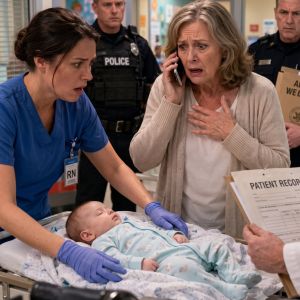
At the hospital, doctors stabilized Dad and ordered tests. The physician overseeing his care explained that his blood contained unusually high levels of sedating medication. His condition was consistent with repeated exposure, not merely one questionable dose.
“Some medications can cause drowsiness after a stroke,” she said. “But what we’re seeing requires a full review of everything he’s been receiving.”
I remembered Mariana removing those white tablets and whispering that nobody could know yet.
Back at the house, I reviewed the recordings I’d been too frightened to examine carefully. I found Patricia speaking on the phone in Dad’s room several nights earlier.
“I gave him both,” she said. “He’s barely waking up now. I’m worried about his breathing.”
The response came through the speaker clearly enough for me to recognize my sister’s voice.
“The guardianship hearing is coming up. Once I’m handling his accounts, we won’t have to keep arguing about this. Just do what we discussed.”
Patricia protested, but Verónica interrupted her.
“Don’t start getting nervous now. You’ve been paid to follow instructions.”
I replayed the recording, hoping I’d misunderstood. Then I found another conversation in which Verónica specifically mentioned the injection Patricia had been preparing when I entered the room.
I contacted the police and provided the recordings, medication containers, and information from the hospital. The officers told me not to confront anyone while they investigated.
Sitting alone in the hospital corridor afterward, I finally understood why Mariana had been hiding pills.
She hadn’t been giving Dad something dangerous.
She’d been removing medication she believed was dangerous and trying to prove it.
The Woman I’d Driven Away
I drove to Mariana’s mother’s house that morning. Her mother opened the door but didn’t invite me inside.
“My daughter came home crying because your family called her a thief,” she said. “And you stood there and let them.”
I had no defense.
“You’re right. I need to speak to her, but I understand if she doesn’t want to see me.”
Mariana appeared behind her mother a moment later. She looked exhausted, and when she saw me, her expression closed.
I told her Dad was in the hospital. Then I told her about the syringe, the recordings, and the test results.
She sat down slowly.
“I knew something was wrong with those pills,” she whispered. “He was getting worse after every nighttime dose, but his prescribed medications didn’t explain it.”
She explained that she’d removed samples because she suspected the contents didn’t match the label. The unfamiliar man was a former nursing-school classmate who worked at a laboratory. He’d helped arrange independent testing, and she’d paid the laboratory costs herself.
“I should’ve told you sooner,” she admitted. “But Verónica kept accusing me of interfering with his care. I needed something more than my word.”
“You did try to tell me. I wouldn’t listen.”
She looked at me for a long moment.
“How did you know about the pills?”
There was no way to answer without telling her everything.
I admitted I’d installed cameras and secretly watched her, including inside Dad’s bedroom.
Mariana stood up.
“You were spying on me?”
“Yes.”
“You watched me care for your father every day, and you still thought I was hurting him?”
I lowered my eyes.
“I was a coward. I believed what I was afraid of instead of asking you to help me understand.”
Her voice trembled.
“You needed a camera to tell you what kind of person your own wife was?”
I couldn’t answer.
I’d brought the engagement ring she’d left on our dresser, but when I took out the small box, she shook her head.
“Please don’t make this about our marriage right now.”
I put it away.
“I didn’t come to ask you to move back. Dad’s awake, and he’s been looking toward the door every time someone enters. I think he’s waiting for you.”
Mariana covered her face.
After a moment, she went to get her coat.
At the hospital, Dad opened his eyes when he heard her voice. She took his right hand, and his fingers tightened around hers.
“I’m here, Mr. Reyes,” she whispered. “I’m sorry I was gone.”
His lips moved. At first, nothing came out. Then he managed a faint, uneven sound.
“Ma…riana.”
She bent over his hand and cried.
I stepped into the hallway, overwhelmed by the simple fact that my father had been trying to reach the person I’d driven away.
Twenty-Two Missing Minutes

That evening, I contacted the security technician and asked whether anything could be recovered from the hallway camera’s network outage.
He examined the system and called me back.
“The connection dropped, but the camera was recording locally. I’ve recovered the footage.”
The video showed Paul, Verónica’s husband, entering the hallway while everyone else was occupied. He paused beside Mariana’s handbag, opened it, and slipped Dad’s gold watch inside.
Then he walked toward the router cabinet.
I sat staring at the screen. The watch hadn’t been stolen by my wife; it had been planted to make her look guilty.
The technician preserved the original recording, and I passed a copy to the investigators. Mariana also provided the laboratory report, payment receipts, and messages documenting her attempts to identify the tablets.
The next morning, Verónica called to say she and Paul were coming over with their attorney. She claimed they had important documents concerning Dad’s property.
I informed the investigators, then agreed to the meeting.
Verónica arrived wearing a black dress and carrying a leather portfolio. Paul followed her, looking unusually tense. Their attorney placed a document on my dining-room table.
“Your father signed this power of attorney six months ago,” he explained. “It appoints your sister to manage his accounts, real estate, and business interests.”
I examined the signature.
Six months earlier, Dad had struggled to hold a spoon. The idea that he’d signed an extensive legal document without anyone telling me was difficult to accept.
“I want the original examined,” I said. “And I want to know who witnessed the signing.”
Verónica laughed sharply.
“Oh, give me a break, Daniel. You’ve been so distracted by that wife of yours that somebody had to take responsibility.”